
SCOPIOUS / ECOMMERCE
E-commerce Website Development in Egypt
E-commerce website development in Egypt: plan Shopify or WooCommerce around products, checkout, fulfilment, mobile experience and acceptance testing.
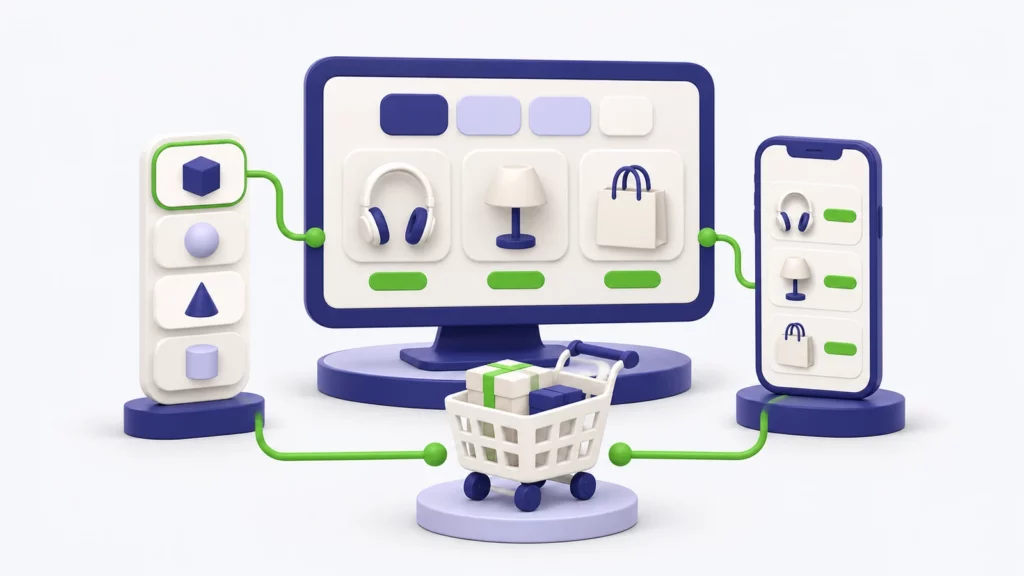
Customers need to find a product, compare meaningful information and complete checkout without needless steps.
An e-commerce build should define product categories, variations, inventory rules, cart and checkout journeys, payment and delivery integrations, and order-status testing. Payment-provider fees, catalogue preparation, subscriptions and ongoing fulfilment operations are scoped separately so the merchant understands what is required for an operational store.
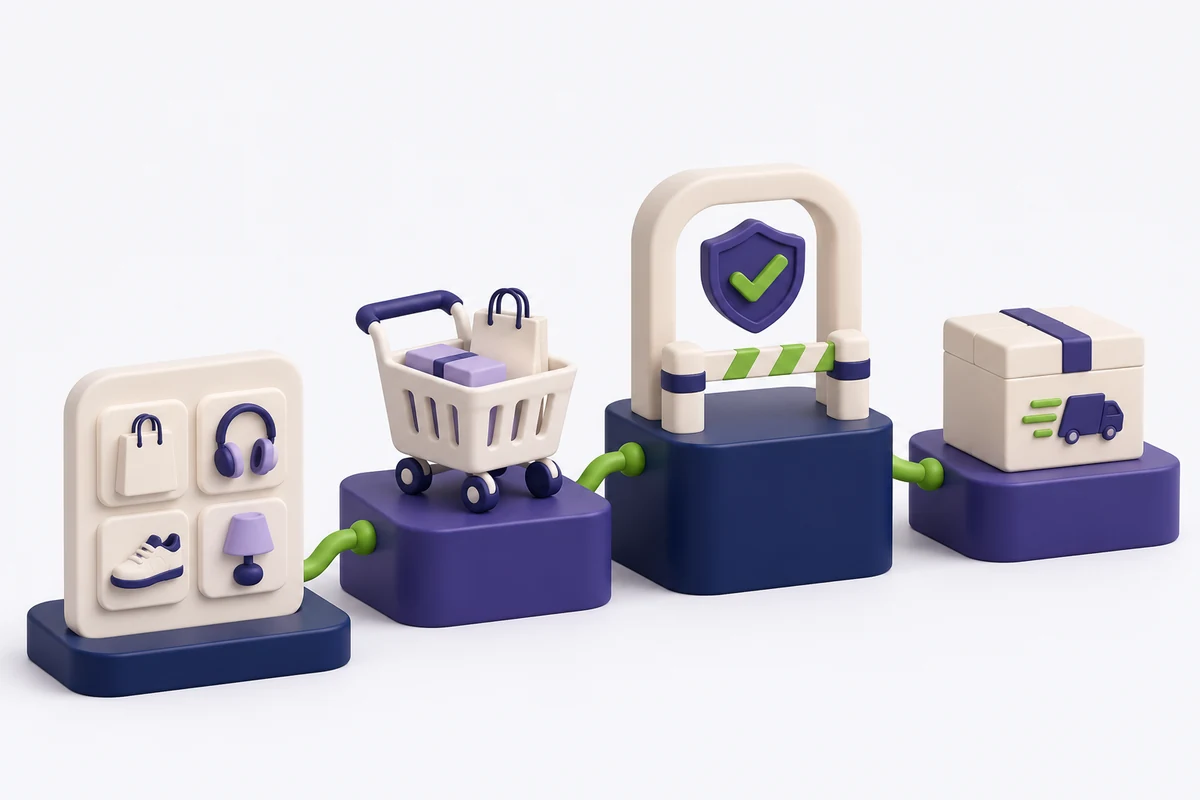
Validate a complete customer order, not just a checkout design
For a product with several sizes and delivery zones, a realistic acceptance test follows the customer from category filtering to selecting a variant, checking availability, choosing delivery, paying and receiving confirmation. The store team must see the same order without duplicates or contradictory status updates. Returns, failed payments and back-office corrections are separate scenarios worth documenting.
Before choosing an e-commerce platform: map the number of products and variants, local payment methods, delivery zones, returns and who will maintain the catalogue. Test how shoppers find a product on a phone, understand delivery costs and recover from a failed checkout. A service-led business that mostly needs enquiries should first consider the company website development scope; a retailer with direct transactions needs checkout and operational acceptance tests instead. After a store is ready, its acquisition strategy may involve Google Ads management, but a campaign cannot compensate for broken stock, pricing or checkout. The published Cinza store design example in our portfolio shows an agreed visual and category experience; it is not evidence of unverified store revenue.
Before agreement, clarify who supplies product information, payment and shipping accounts, legal policies, multilingual content, training and ongoing maintenance. These decisions often affect the project more than choosing a theme.
What the documented Cinza store work demonstrates
The selected-work gallery includes Cinza’s store design, a separate currency-and-market display integration and an e-commerce SEO plan. They are distinct pieces of work, not a single claim of revenue growth. For a new merchant, we identify which assets, catalogue rules, delivery flows and integrations are in scope, and agree how they will be accepted before selecting a platform or committing to a launch.
Choose the platform after mapping the operation
Shopify and WooCommerce have different hosting and maintenance responsibilities, but neither label resolves inventory, delivery or payment rules on its own. A suitable platform depends on the catalogue, variants, order responsibilities, required integrations and who will maintain the system. An Egyptian store should test its own payment and shipping arrangements rather than assume they work because a plugin is installed.
An online shop selling configurable products to businesses can need a different purchase flow from a direct-to-consumer catalogue. These decisions belong in the discovery scope before the design is priced.
The acceptance tests behind a working store
We define sample category and product journeys, mobile search and filtering checks, order confirmation, failure handling and handover responsibilities. Integration work is agreed separately where stock, fulfilment or customer data must move between systems.
Portfolio examples such as the Your Emma Shopify project can illustrate a documented implementation scope; they should not be presented as evidence of conversion growth without measurements.
An online store starts with a purchase journey
Consider three buyers: one knows the exact product name, one is comparing alternatives and one has already chosen an item but needs to understand delivery and returns. Each needs a different part of the store to work well. Search and categories serve discovery; a detailed product page supports evaluation; checkout, stock messages and delivery information reduce uncertainty before purchase. We map these paths before selecting visual effects or deciding how many banners the homepage should contain.
A successful storefront is not simply a product gallery. The business team must also be able to maintain prices, variants, inventory and order statuses. We review what happens behind every customer action, which systems own the data and what needs a manual approval. A polished front-end cannot compensate for unreliable fulfilment.
Choosing Shopify, WooCommerce or another platform
The decision should follow operating requirements: product count, variants, taxes, local payment options, shipping rules, language needs, inventory sources, internal expertise and expected integrations. A managed platform can simplify some maintenance but may impose constraints through fees or apps. A self-hosted platform offers different forms of control and responsibility. Neither is universally right for Egyptian businesses or cross-border stores.
We document the trade-offs rather than selecting a platform by popularity. For example, a company requiring specialized ERP synchronization and a custom approval flow may weigh integration flexibility differently from a small store selling a few standardized items. The appropriate recommendation depends on confirmed features and the client’s capacity to operate the result.
Product information that helps people choose
A category page should use terms customers understand. Filters should correspond to meaningful product attributes, not every internal database field. Product descriptions need accurate specifications, images, sizes, availability and compatible options where applicable. We avoid repeating generic claims about quality across every product, because they do not answer the buyer’s actual questions.
Where product variations exist, we decide how the customer moves among them and whether prices, stock and images update reliably. A helpful comparison guide may deserve a separate informational page, while a transactional product page should remain concise enough for purchasing decisions. Long copy is useful only when the product genuinely requires explanation.
Checkout and fulfilment require failure testing
A complete acceptance test covers more than a successful payment. What happens after a declined card, a network interruption, an unavailable item or a duplicate button click? How are payment provider notifications matched to orders? Can shipping rates change after an address is entered? How does a customer request a return? These details influence trust and require explicit rules.
We use safe test transactions and avoid exposing financial or personal data in development environments. Where third-party gateways or shipping services are involved, ownership, access permissions and monitoring responsibilities are documented. An order should not be recorded twice because a webhook or user request was retried.
Search visibility for catalogues and products
Good e-commerce SEO maps search intent to the right destination. Commercial category queries belong on useful category pages; product-specific searches need accurate product pages; buying guides can support comparisons. We review crawl paths, canonical tags, faceted navigation and out-of-stock handling to avoid creating large numbers of duplicate URLs through filters.
Product structured data must reflect what visitors can actually buy, including accurate availability and pricing when those values are exposed. The store should not generate review or rating claims from placeholder data. Image descriptions and responsive sizes are also part of helping users find and evaluate products without bloating the page.
Measurement and handover
After launch, the business should be able to inspect product views, cart additions, checkout failures and completed orders using an appropriate analytics setup. These observations help distinguish a discovery problem from a checkout or fulfilment problem. They do not justify a guaranteed sales lift; actual revenue depends on demand, pricing, customer service and other variables outside website development.
Not every commercial website needs a full store. If your business sells through consultations, proposals or qualified enquiries instead of direct checkout, our business website design service may be the more appropriate starting point. The decision should come from the customer journey and operating requirements.
The handover includes operational roles, training for catalogue updates, integration notes, test results, access ownership and a backup or rollback plan. The store is ready when the team can manage real orders reliably, not when the desktop mock-up receives approval.
Review available work
For the Arabic version of this service: النسخة العربية.
SCOPIOUS / NEXT STEP
Start with your business need
Share the current setup and what you want to improve. We can discuss a clear scope and reviewable next steps.