
SCOPIOUS / CRM INTEGRATION
CRM Integration Services for Business Systems
CRM integration services in Egypt: map customer records, synchronise systems, protect role-based access and test duplicate prevention and recovery.
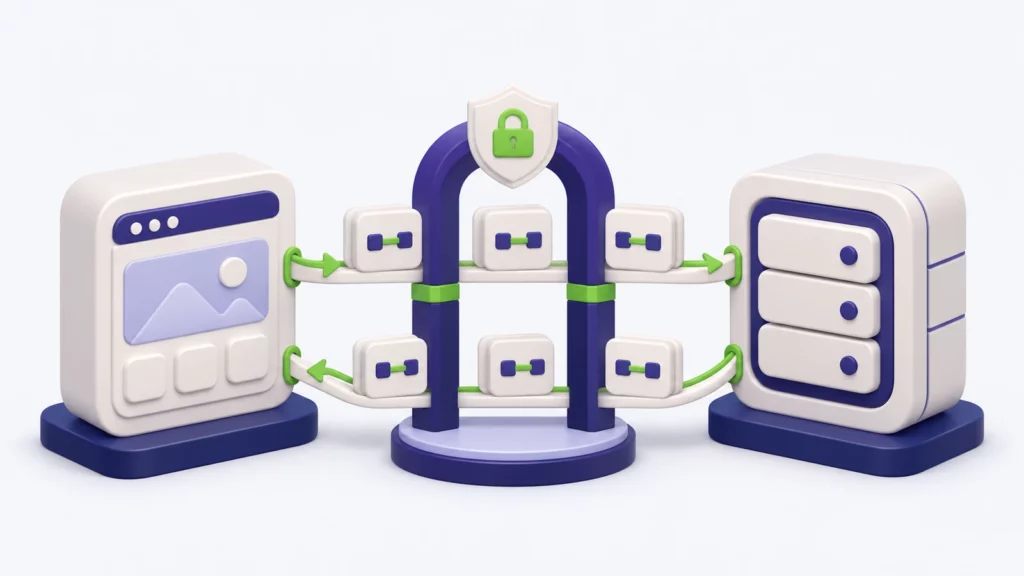
Moving customer data between tools requires source-of-truth rules, ownership and safeguards against conflicting updates.
CRM integration should define which system owns each record, how customers and activities are matched, which roles can access information and how conflicts are resolved. Deliverables may include a field map, API contract, synchronisation checks, exception logs and recovery documentation appropriate to the connected systems.
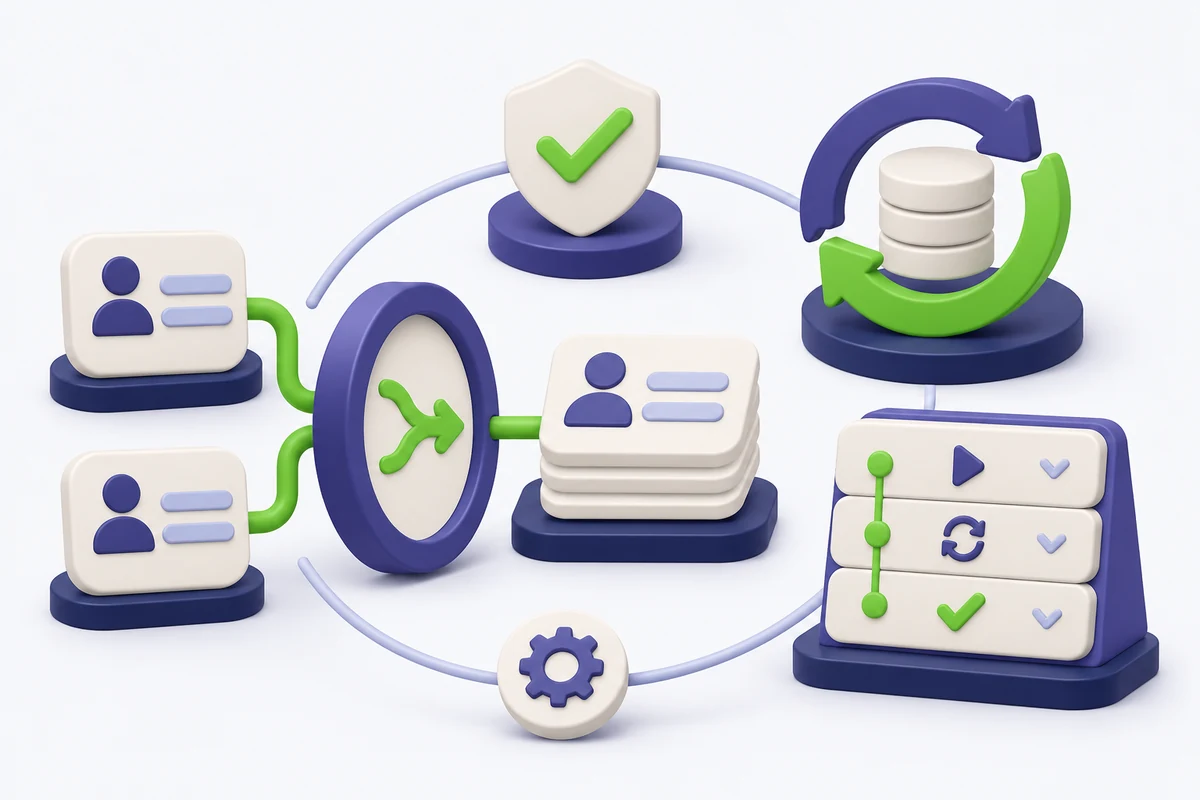
Agree on record ownership before connecting two systems
A customer might submit a website form, then speak with a salesperson who creates another CRM record. If both entries can update the account independently, reports and follow-ups become unreliable. We therefore decide which system owns each field, how records are matched, what happens when values conflict and who is allowed to override them.
Before connecting a CRM: confirm which system owns the customer record, what makes two contacts the same person, who may update each field and how failed synchronisation will be reconciled. The project should distinguish lead discovery from the later decision to accept a lead into the pipeline. That qualification stage belongs to GTM Engineering. If a website, assistant or mobile application needs to perform controlled actions through business endpoints, the interface contract and permissions are addressed in MCP and API integration. The practical handover should include field mapping, duplicate tests, permission scenarios and a recovery route—not an unsupported promise that every system can be connected without adapting it.
We test with real role boundaries and safe sample data, not just an administrator account. Deliverables may include field mapping, API contracts, duplicate prevention, exception logs, rollback procedures and responsibility for operational support.
A documented RealHomes-to-Laravel CRM integration
One selected-work entry describes connecting a WordPress RealHomes property platform with a Laravel CRM and linking published listing URLs back to the operating system. This is a concrete example of identity mapping and synchronising records between two applications. A new CRM integration still needs its own data contract, permission model, duplication tests and rollback plan; the portfolio does not establish those results in advance.
One customer, multiple systems: agree what each field means
Duplicate records and contradictory statuses often start before a connector is written. We identify which application owns each value, which events create or update a customer, and which employee may see or change the record. A CRM project cannot be assessed solely by whether two systems exchange messages.
The distinction from workflow automation is important: synchronisation needs durable identity and conflict rules, while task automation focuses on moving events through a process. Some implementations need both, and the proposal should say which is included.
Integration deliverables that a client can maintain
A scope can include source-to-target field mapping, API contracts, deduplication rules, synchronisation tests, exception logs, permission checks and rollback guidance. We test with the actual role boundaries as well as the administrator account.
A successful request is not enough to demonstrate that updates are accurate, private and recoverable. Only approved, non-sensitive examples should be shown in public case material.
Two records for one customer: the integration problem
A customer submits an enquiry on the website and later asks a question through another channel. The sales team now has two records, two different histories and perhaps two reminders. Neither source system is necessarily broken. The problem is that nobody defined how identities are matched, which record is authoritative or who can change it. CRM integration begins with those decisions rather than a generic promise to connect everything.
We identify the entities involved: leads, customers, opportunities, tasks, projects and documents as relevant to the business. For each, we map stable identifiers, mandatory attributes, permitted updates and the owner of each field. Not every matching decision can safely be made from a phone number or similar name; uncertain cases may need a human review instead of silent merging.
An integration contract starts with data meaning
A field called status may represent a sales stage in one tool and an approval state in another. Copying the value without mapping its meaning can create misleading reports. We agree source-to-destination mappings, accepted values, validation rules and expected responses before coding. This work often exposes inconsistent forms or incomplete processes that would have undermined the integration after launch.
We also decide whether a change requires an immediate API call, an event-driven message or a scheduled synchronization. That choice depends on business need, latency, data sensitivity and error-handling capacity. Building a real-time system when the team reviews changes only once a day may add complexity without improving decisions.
Permissions remain the responsibility of the server
Employees may have different access to leads, deals and teams. A connector with broad privileges should not become a shortcut around those rules. We test record ownership and role-based access at the API level rather than only hiding menu items in the interface. We use scoped credentials, store secrets appropriately and document how access is revoked or rotated.
Personal data should be shared only where the workflow requires it. Diagnostic logs must not expose credentials or full customer records. An audit trail can show that an operation occurred and whether it succeeded while minimizing sensitive content.
Failure paths define reliability
We test new and existing records, duplicates, missing fields, conflicting updates, expired tokens, retry requests and temporary outages. A safe workflow should not create the same lead twice because the network returned a timeout. It needs a way to identify an operation, retry carefully and alert an administrator when automatic recovery is inappropriate.
Data reconciliation is equally important. A green status on an integration dashboard does not prove all fields are correct. We check that the destination actually received the intended values and that historical records remain consistent with the rules agreed during discovery.
From connected systems to an actionable sales journey
An integration can turn a service-page enquiry into a qualified work item if the selected service, permitted contact details, source and next responsible person are recorded consistently. Without an owner and follow-up step, the same enquiry simply moves from an email inbox into a database. We work with sales and operations to define what happens after delivery and how exceptions are reviewed.
Where attribution is used, we acknowledge that the buyer may have visited through more than one channel. A CRM report should not invent certainty about the contribution of the last click. Useful measurement combines source information with qualification and subsequent actions, using the data the organization legitimately has.
What a finished scope looks like
Deliverables typically include a data map, API specifications, authentication boundaries, retry and duplication rules, acceptance tests, monitoring notes and rollback instructions. We clarify any dependence on third-party access or unsupported interfaces before committing to implementation. A tool’s brand name does not establish that it can be integrated in the way the client imagines.
Connecting data sources is not the same as automating approvals, reminders or handoffs between teams. If those repeatable steps are the main requirement, our workflow automation service covers triggers, retry rules, monitoring and exception handling alongside the CRM integration scope.
We favor an initial connection that can be tested end to end, then expand to notifications, reporting or AI assistants only when the operational case is clear. This reduces risk and gives the client a system the team can understand and maintain.
Relevant documented work: the Real Estate Platform–CRM Integration connects WordPress RealHomes and a Laravel CRM, while the CRM, n8n and WhatsApp integration describes customer-conversation and lead handoffs. Both appear in our published work, with the delivered scope stated separately from business results. Review the CRM integration examples and use them to discuss data ownership, authorisation, duplicates and operational handover.
For the Arabic version of this service: النسخة العربية.
SCOPIOUS / NEXT STEP
Start with your business need
Share the current setup and what you want to improve. We can discuss a clear scope and reviewable next steps.