
SCOPIOUS / WEBSITE DESIGN
Business Website Design and Development in Egypt
Business website design in Egypt with responsive layouts, clear service journeys, bilingual usability, accessible forms and documented delivery checks.
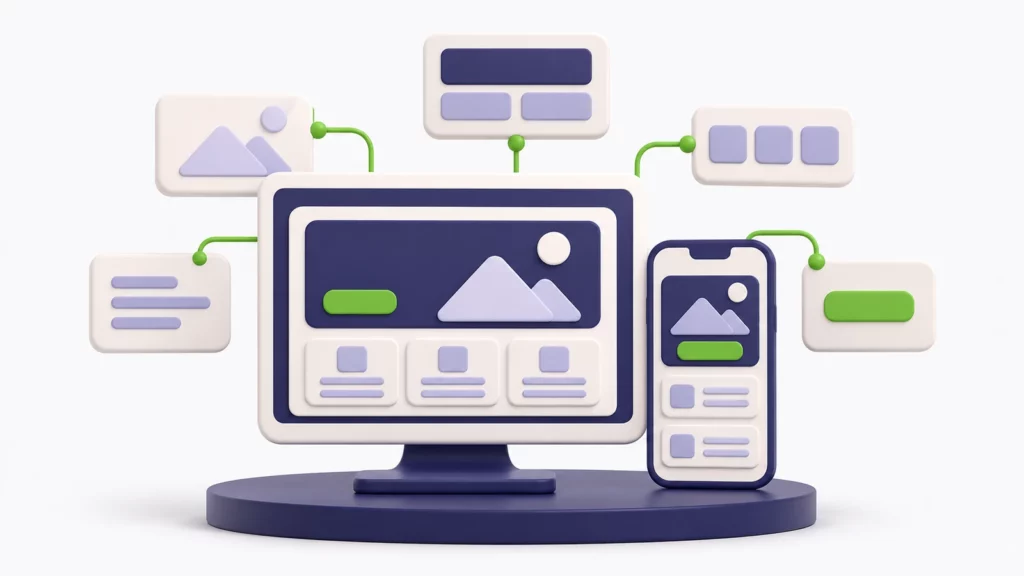
A useful business website makes the offer understandable, works on mobile and gives visitors a clear next action.
The agreed website scope covers service architecture, wireframes or page designs, responsive layouts, English and Arabic where required, working enquiry paths, content-management handover and acceptance testing. We clarify who supplies copy, photography, integrations and hosting before development so an attractive prototype is not mistaken for the entire launch.
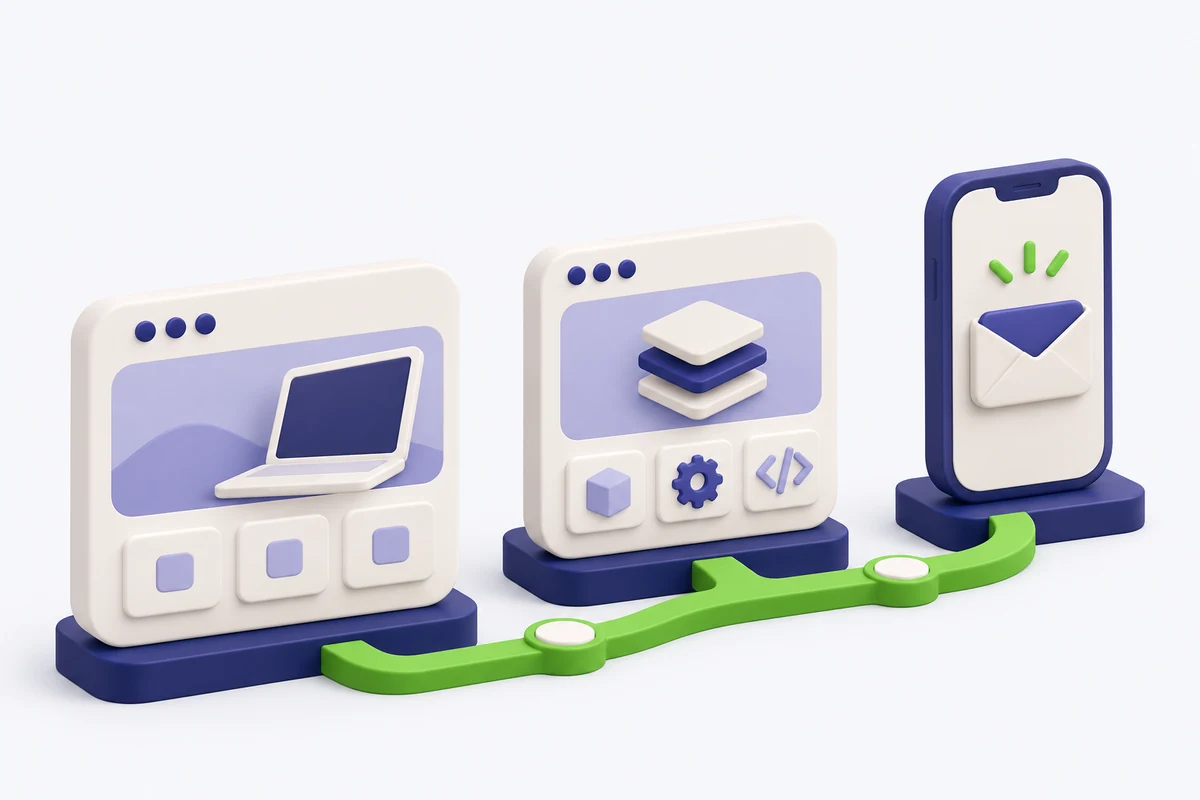
A practical website sign-off scenario
Consider a company with separate construction, consulting and maintenance services. The first-time visitor should identify the relevant division from mobile navigation, understand what a project request requires and reach the correct enquiry form. A second visitor may want to see documented projects before making contact. We test both journeys on real screen sizes rather than treating an attractive homepage mockup as completed UX.
Website design also needs readable service copy and accessible links. Our SEO service methodology describes why crawlable content and clear headings matter. The portfolio should show the verified design or implementation scope for each relevant project without inventing conversion data.
Acceptance criteria can include translated navigation, form validation, responsive imagery, keyboard access to primary actions and a content handover plan. We preserve existing working URLs unless an evidence-led migration has been separately agreed.
Website projects with different design requirements
Our public portfolio shows a corporate site for Arkan Plus, service request journeys for Al Alameya Maintenance and the Cinza e-commerce store interface. These projects illustrate why a company’s service hierarchy, mobile navigation and enquiry journey must match the business model. The work cards show documented scope; they are not presented as independently measured proof of search rankings or conversion growth.
Design the path from service discovery to enquiry
A visitor coming from search wants a direct explanation, a referral visitor wants credible work, and a returning buyer may be ready to contact the team. We map those journeys before choosing a new homepage layout. The information structure should make each path understandable on mobile, including when the user switches between Arabic and English.
A redesigned hero cannot compensate for a broken form or a services menu that sends every card to the same destination. We test navigation and contact flow as behaviors, not just screenshots.
What a website delivery includes
Scope can cover service hierarchy, page copy placement, responsive layouts, implementation, accessibility checks, form testing and a maintainable handover. Existing pages and permalinks are reviewed before a redesign to avoid losing working search destinations. The acceptance list makes clear which translations, integrations and content assets are included.
Where approved portfolio material exists, such as the Cinza website work, it should illustrate the actual delivered scope. No performance numbers or outcomes are attached to a case without supporting evidence.
A company website is a sequence of decisions, not a collection of screens
A visitor may arrive from Google knowing the problem but not the vendor, from a referral wanting evidence, or from a project gallery looking for a similar delivery. Those visitors do not have identical needs. We design pathways that help each person understand the service, examine relevant work and reach an appropriate enquiry form. The homepage introduces the business and its service groups; individual service pages explain scope and outcomes; the portfolio demonstrates work that can be substantiated.
The first design activity is therefore an information and journey review. What does the company offer, to whom, and where? Which questions are answered too late? Do the service cards lead to real explanations or simply open the same contact form? We preserve what works and revise the points that cause uncertainty rather than replacing the entire website because a different layout looks fashionable.
When should an existing website be improved rather than rebuilt?
An established WordPress site may already have valuable URLs, indexed articles and integrations with external systems. Rebuilding it without an inventory can break forms, languages, navigation and search visibility. We start by auditing the current theme, page builder, plugins, site structure and known performance concerns. A controlled change to the navigation, hero messaging or service hierarchy may achieve more than a risky platform migration.
A full rebuild can be justified when the existing system cannot support the business requirements reliably or safely. That decision should be documented against operational constraints, migration effort, content ownership and the needs of the team that will maintain the new site. It is not a default recommendation.
Responsive design means testing behavior
A mobile layout is not a shrunken desktop screenshot. Cards may need a different arrangement, headings must retain hierarchy, forms need practical touch targets, and navigation should remain usable in both LTR and RTL interfaces. We test small and large phones, tablets and desktop widths. A menu that opens correctly on one device can still obscure a CTA on another; the test matrix needs to reflect real tasks, not only static screenshots.
Modern motion is welcome when it communicates the brand or helps orient users. However, critical content should remain readable without waiting for an animation, and reduced-motion preferences deserve support. Heavy video or oversized assets should not delay the message a customer came to see. The goal is a coherent first impression that remains accessible and fast enough for ordinary devices.
Search visibility belongs in the design process
SEO is not a plugin added after a launch. We use actual heading structure, text content that is available in HTML, descriptive internal links, sensible page titles and appropriate image alternatives. We define one commercial destination for each primary service intention, then connect relevant guides and documented work. A design that hides the only description in an image or a carousel can make the site harder to understand for both users and search systems.
Existing permalinks should not be casually changed. We inspect page history, canonical signals, redirects, sitemap inclusion and language relationships before a restructuring. When a new English and Arabic service pair is ready, we verify both destinations before adding visible language navigation and hreflang relationships.
The actual deliverables
A website project can include discovery, content architecture, wireframes, responsive design, development, content placement, basic technical SEO, form testing and deployment support. The precise combination depends on whether the client already has an approved brand, copy, photography and hosting. We state what is included and what requires a separate integration, translation or content-production agreement. The scope should name acceptance criteria rather than rely on the subjective description professional.
Portfolio examples illustrate the type of work we can undertake but should not promise results a project did not measure. A conceptual graphic can explain a design idea, while a customer case study needs approved screenshots and a faithful description of the actual scope. We keep those roles separate.
Testing the enquiry journey and handover
Before launch we check navigation, language switching, forms, confirmation states, links, media and common interaction errors. A contact form is not proven merely because its submit button can be clicked; a test enquiry should reach the intended workflow. If the client uses CRM, we define which fields are passed and how duplicates and privacy are handled. We also document account ownership, editing permissions, backups and recovery steps.
The success of a business website is not necessarily a higher page count. It is a usable, maintainable path between the visitor’s question and an accountable next step, supported by evidence rather than claims that every redesign will produce a particular increase in sales.
A corporate website usually helps visitors understand services and submit qualified enquiries. If the primary journey is product selection, inventory, checkout and order fulfilment, review our e-commerce development service rather than treating an online store as a standard company website with extra pages.
Review available work
For the Arabic version of this service: النسخة العربية.
SCOPIOUS / NEXT STEP
Start with your business need
Share the current setup and what you want to improve. We can discuss a clear scope and reviewable next steps.