
SCOPIOUS / BUSINESS SOFTWARE
Mobile App Design and Development for Android and iOS
Android and iOS app design and development for businesses: UX/UI, Flutter where suitable, dashboards, CRM/API integration, testing, launch preparation and support.
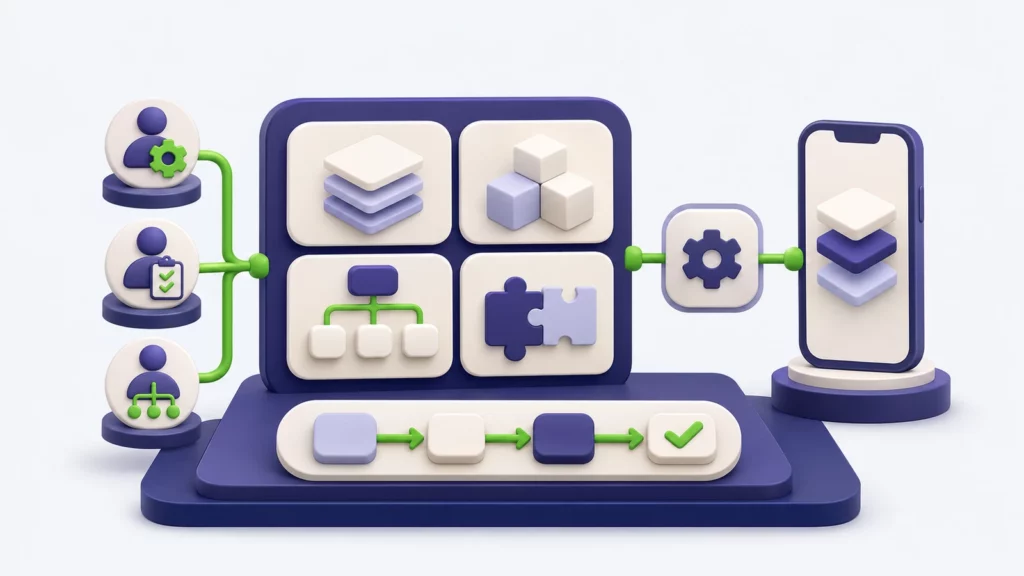
Scopious designs and develops mobile applications for customers and business teams, covering product discovery, UX/UI design, app development, testing and integration with existing systems. Backend services, business software and mobile APIs support the complete product rather than defining the whole service.
A complete mobile app engagement includes product discovery, UX/UI, Android and iOS development with an appropriate technology choice, device and permission testing, backend integration where required and release preparation. Mobile APIs support the user-facing app; store approvals, ongoing support and infrastructure are defined separately in the agreed scope.
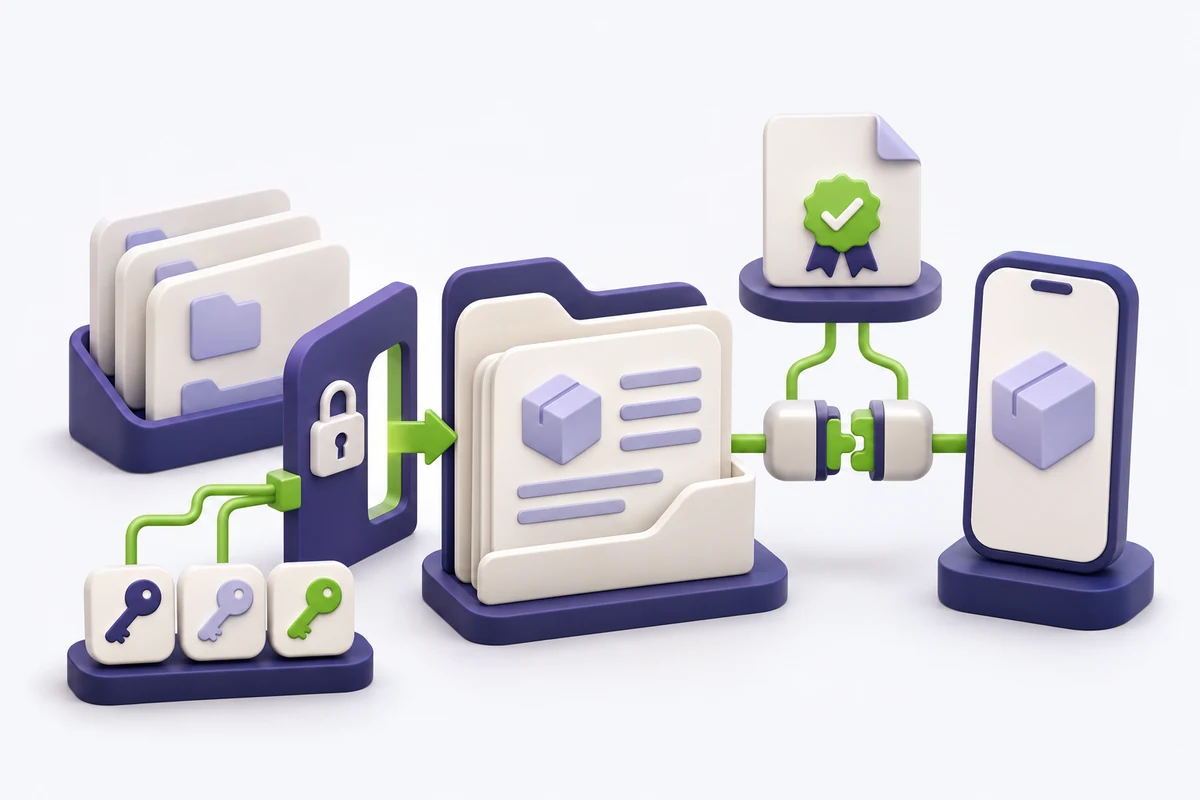
What complete mobile app development looks like in three use cases
A customer-facing Android and iOS application might need onboarding, service requests, notifications and an understandable status view. A sales-team app may need role-scoped records, offline-friendly task handling and timely synchronisation. A project operations app may require reports and approval steps that vary by role. Each product has different screens, permissions and acceptance tests, even if all connect to the same backend.
App or responsive website? Choose a mobile application when users need mobile-specific workflows, device permissions, offline handling, secure sessions or interaction patterns that a responsive website cannot adequately provide. A business that mainly needs service information and an enquiry form may be better served by website design and development. If the app must use existing business operations securely, define authentication, least-privilege tool access and error handling through MCP and API integration. Acceptance testing should cover Android and iOS devices, login and session expiry, accessibility, performance and release requirements. Our published mobile API work is evidence of integration delivery, not proof that a complete store-approved application has been shipped.
Depending on the agreed scope, delivery includes UX/UI prototypes, Flutter development or another appropriate technical approach, test builds for supported devices, permission checks, documentation, release assets and ownership of store accounts. App Store and Google Play approvals are controlled by the platforms and are not guaranteed.
What our published mobile API work does—and does not—establish
The portfolio describes the Candles L Operating System and its mobile API work, including role-based authorisation, interface documentation and Postman tests. That confirms a documented backend and integration scope; it is not by itself proof that a consumer Android or iOS application has launched. For a complete mobile-app proposal we distinguish backend capability from UX/UI design, on-device builds, app-store submission and approved client-specific case material.
What is included in mobile app design and development?
We begin with users, business goals and the journeys the application must support. Discovery covers screen flows, wireframes and UX/UI design before implementation. Depending on scope, the product may be a customer-facing app, a sales-team tool, a project operations app or a mobile companion to an existing business platform, with Android and iOS delivery where required.
Flutter may be appropriate for shared cross-platform development, while more specialised device or integration requirements may call for another approach. Technology selection follows a documented feature and maintenance decision, not a default promise.
From approved screens to tested Android and iOS builds
An app project can include user journey mapping, interactive prototypes, interface approval, development, sign-in and access rules, notifications, APIs, real-device testing and release preparation. We distinguish app screens from back-office administration and third-party integrations so each deliverable has an owner and acceptance criteria.
Where included in the contract, we prepare release assets and submission support for Google Play and the Apple App Store. Store decisions and review timing remain subject to each platform’s policies and cannot be guaranteed.
When does a mobile app need a dashboard, CRM or ERP integration?
Customer portals, field-service applications and internal business apps often need controlled access to orders, tasks, appointments or projects. We map source systems and record ownership, agree synchronization rules and implement APIs with consistent permission checks, error handling and recovery behavior.
The mobile API is one technical layer of the service. Product design, user experience, client-side development, accessibility, testing and post-launch ownership remain essential parts of a complete app engagement.
Deliverables, ownership and post-launch support
The agreed handover can include approved UX/UI designs or prototypes, test builds, documented roles and features, API specifications, release packages, acceptance test evidence and source-code delivery according to the contract. We also clarify who controls store accounts, infrastructure, external-service credentials and any maintenance agreement.
If an application extends an existing web or CRM system, changes to shared processes are reviewed and tested separately to avoid unexpected disruption. The outcome should be an operable product that users can navigate and the business can maintain—not merely a list of endpoints.
Define the app experience and operating responsibilities
A dashboard should show the information a team member is permitted to inspect and allow the next appropriate action. Project managers, sales staff and executives may need different summaries and different record-level access. We map these rules before deciding which charts, tables or approval screens to build.
Where an existing business system already works, a controlled extension may be safer than rebuilding it. An additional interface should solve a genuine workflow issue instead of duplicating the same data in another place.
Mobile API and backend integration support the complete application
Mobile integrations need explicit request and response formats, permission checks, error cases and acceptance tests. Changes should not silently alter web controllers or shared processes outside the agreed scope. The handover can include API documentation, test cases, operational reporting rules and recovery notes.
Client-specific employee data, project details and internal credentials must not become public examples. Any portfolio reference describes only an approved, verifiable implementation scope.
A dashboard should answer a question and open its evidence
A project director opens a dashboard showing overdue tasks, but the number is not linked to the records that produced it. The screen may look modern while failing the actual management task. Before designing business software we identify the decisions each role makes, the information required, and the actions that follow. A sales manager, project supervisor and executive may all need different views of the same system. Their permissions and context matter more than adding another graph.
We map the existing process with the people who use it, including exceptions and approval steps. Sometimes a better notification or a clear record detail page solves the problem. A new module should be justified by a workflow that the business can explain and accept, not by a feature list borrowed from another product.
From operating rules to a testable specification
We describe the life cycle of a request: how it is created, reviewed, assigned, approved, completed or reopened. We record which actions are allowed at each state and what data each team owns. The specification includes failed requests, missing information, alternate approvers and edge cases, because everyday operations rarely follow a perfectly straight path.
Each important requirement needs an acceptance test. Does a rejected request remain visible to the right team? Can the permitted manager reassign it? Can an employee outside the department access it by guessing an ID? These questions are not decorative technical details; they determine whether the system can support real work.
Role-based access is a backend requirement
Hiding a menu item does not protect the underlying data. The server must verify the user’s role, organizational scope, relationship to the record and permission for the requested action. We test both allowed and denied operations. For delegated access we define scope and expiry rather than handing out permanent administrator rights.
Sensitive operations require an audit trail, but logs should avoid unnecessary exposure of personal or confidential data. We also identify how a permission change affects reports and search results so the same information is not accidentally available through a different endpoint.
Mobile APIs need stable contracts
A mobile application often requires concise responses, predictable error formats and practical behavior under unreliable connectivity. It should not duplicate the business rules in a way that makes the web and app disagree. We define routes, requests, resource representations, authentication, pagination, validation and version compatibility. Where Flutter developers are involved, the handover should include Postman examples and permission scenarios.
We separate mobile-specific development from unrelated web templates and controllers where a project requires that boundary. A change to a shared service can affect both platforms, so production modifications need an impact review, tests and a rollback plan. The convenience of a quick patch is not a substitute for controlling its scope.
Operational reporting should be traceable
If a report says twelve tasks are overdue, the authorized user should be able to open the corresponding tasks and inspect their status and owner. This requires reliable aggregation, links to detail views and consistent filtering. We verify that the count matches the underlying records under the user’s permissions instead of trusting a screenshot of a dashboard.
An AI assistant can summarize permitted information or help navigate reports, but it should not be able to bypass the same role restrictions. We test whether the summary accurately reflects its sources, whether missing context is stated and whether the employee can follow through to a real action.
Delivery and maintenance
A responsible project handover includes feature and permission documentation, API specifications, test evidence, release notes, access ownership and a recoverable backup strategy. We identify what remains out of scope, what requires client approval and how support issues will be prioritized. This helps the organization keep developing the system without relying on undocumented knowledge.
A mobile app needs product requirements, UX/UI, device testing and a release plan. If it also reads or updates customer or project records, the CRM and business systems integration service can define secure data ownership and synchronisation. An API is one component of an app, not a substitute for the app itself.
Business software succeeds when the right employee can complete a task, the right manager can review it and the organization can trace important changes. The number of screens delivered or lines of code written is secondary to those outcomes.
What the portfolio verifies: the listed Operating System Mobile API covers role-scoped endpoints, technical documentation and Postman tests supporting mobile integration. That demonstrates a backend delivery component, not that a complete Android or iOS application was released to an app store. Review the stated mobile API and connected-systems scope; a new application proposal should separately define UX/UI, Flutter or native development, testing and release acceptance.
For the Arabic version of this service: النسخة العربية.
SCOPIOUS / NEXT STEP
Start with your business need
Share the current setup and what you want to improve. We can discuss a clear scope and reviewable next steps.